Category Guides
Dubai Run: What to Wear, What to Bring and How to Prepare
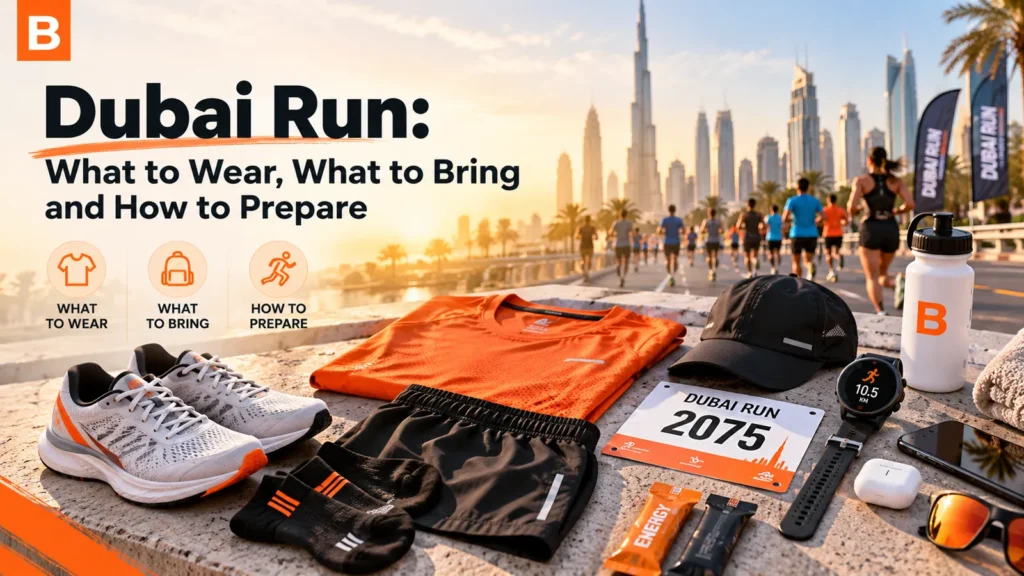
Dubai Run is one of the signature events of the Dubai Fitness Challenge. Sheikh Zayed Road is closed to traffic and handed over to people on foot, with shorter and longer route options so that families, walkers and experienced runners can all take part. It is known for the view — running between the towers of Downtown at sunrise is a different experience from any treadmill.
Routes, dates, start times and registration change each year. Always check the official Dubai Fitness Challenge website, and follow road-closure updates from the RTA.
Every other item is optional. Shoes are not. A poorly fitting or brand-new pair is the most common cause of blisters and sore knees on event day.
Running shoes are personal. They mould to their owner’s foot and their cushioning wears with every kilometre. That makes most used running shoes a poor swap. The exception is the barely worn pair — bought in the wrong size, tried twice, returned to the box. Those are genuinely good finds, and plenty exist.
If you have running shoes that did not suit you, list them with the size, the number of times worn, and a photo of the soles. That last photo answers the buyer’s main question instantly.
The small accessories that make running more comfortable are where swapping shines. They are cheap to make, often received as gifts, and frequently sit unused:
Swapping one thing you do not use for two or three of these is a good trade for both people. More in swapping sports and fitness equipment.
Even if you plan to walk, a few weeks of preparation makes the day far more enjoyable.
Train early or after sunset, and drink regularly. The National Centre of Meteorology publishes forecasts, including humidity, which matters more than temperature for early runs.
Public transport is usually the simplest way to reach the course. Check the RTA for service changes on the day.
The shorter route is popular with families. Children need comfortable shoes, a cap and water, and a plan to keep the group together in big crowds. If you are bringing a stroller, check the event rules before the day.
Kids outgrow trainers and sportswear fast, which makes children’s running gear one of the easiest categories to swap. See swapping kids’ items safely.
Many people finish Dubai Run motivated to keep going. That is the moment to ask what actually helped. If a running belt made a difference, keep it. If the sports watch stayed in a drawer, pass it on to someone who is just getting started.
Joining a local running group is a free way to keep the habit. Groups often share or swap gear among members.
Most problems on event day are avoidable, and they tend to be the same few every year.
Recovery is where small, cheap kit helps most. A foam roller or massage ball eases tight calves and thighs in the days after a longer route. Gentle walking the next day works better than complete rest. Drink water through the rest of the day and eat a proper meal.
Foam rollers and massage tools are a classic unused purchase, so they turn up frequently in swaps. If you plan to keep running after the event, they are worth adding to your kit.
Children do not need specialist running shoes for a short family route — comfortable, well-fitting trainers are enough. What matters is fit: shoes that are too big cause trips and blisters. Because children’s feet grow so quickly, a barely worn pair from an older child is often in near-new condition and an excellent swap.
A first-timer plans to jog the shorter route. They own a pair of trainers but the soles are badly worn. Instead of buying new, they find a barely worn pair in their size listed by someone who bought the wrong model, swapping it for a spare Bluetooth speaker. They also pick up a running belt and a cap in the same exchange.
They train three mornings a week for a month, wear the shoes in properly, and finish the route comfortably. Total kit cost: a speaker they never used.
If you have spare running kit, the weeks before Dubai Run are the best time to pass it on. Say the brand, size and how many times each item has been used. For shoes, photograph the soles; for watches, mention battery life and confirm the device is reset and removed from your account. Bundles work well: a belt, cap and bottle together are more appealing than any one of them alone, and make an easy swap for something you actually want.
Yes. The event is open to walkers, joggers and runners, with route options for different abilities.
Worn-in running shoes, breathable clothing, a cap and sun protection. Avoid anything new on the day.
Only if they are barely worn and the right size. Check the midsole and outsole carefully.
No. A phone app records distance and time. A watch is a nice extra if you can swap or borrow one.
Public transport is usually simplest because roads near the course close. Check RTA updates for the day.
Three short sessions a week for a month, one longer session near your route distance, and early-morning practice runs.
Need running gear or have some to spare? Swap it free on Bartr and arrive at the start line ready.