Category Guides
Camping Gear in the UAE: Desert, Mountain and Beach Essentials
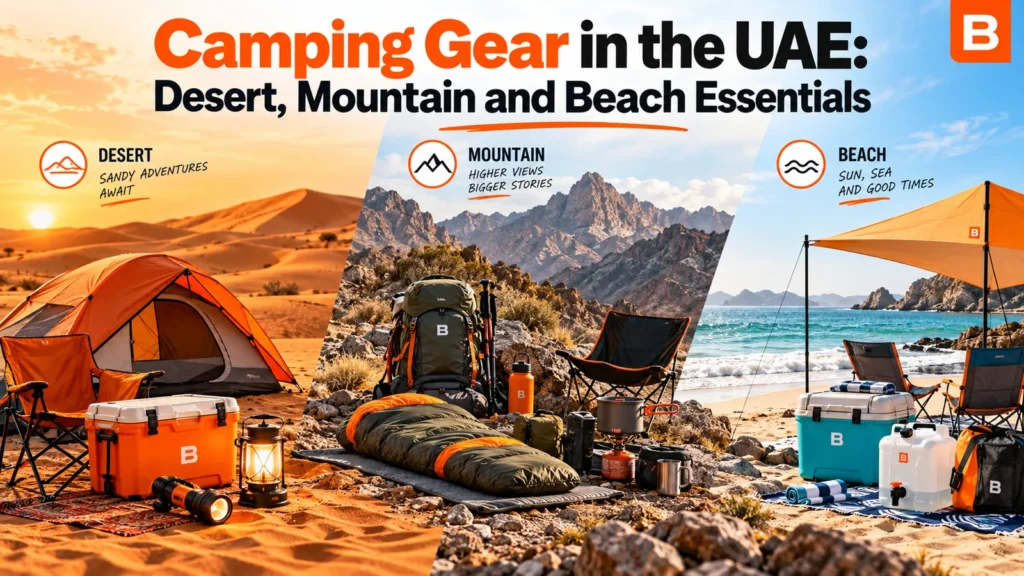
When the heat breaks, the UAE becomes one of the best places in the region to camp. Desert dunes, mountain wadis, beaches and organised campsites all open up through the cooler months. For many residents, a first night under the stars in the desert is a highlight of living here.
It also creates an annual equipment rush. Tents, chairs, cool boxes, lights and stoves are bought in the autumn and stored all summer. Most of this gear is used only a few nights a year, which makes it ideal for swapping or borrowing rather than buying new.
Check the forecast before every trip — the National Centre of Meteorology issues wind, fog and rain warnings, which matter far more in the desert than temperature.
Desert nights can feel surprisingly cold, and mountain nights colder still. Bring more warmth than you think you need.
For desert trips, add a shovel, a tyre pressure gauge and recovery gear, and never go alone. Driving in sand needs experience and the right vehicle.
The only way to check a tent properly is to pitch it. Do it in a park, a garden or a building’s open area before agreeing.
UV is hard on tents in the UAE. Fabric that has spent weeks in strong sun can become brittle. Pinch and gently pull a section of fly sheet: it should not crack or feel papery.
Check the stove’s seals and connections and look for damage. Never accept or transport used gas canisters that look dented, rusty or damaged. Buy fuel new.
Cool boxes should close tightly with intact seals. Chairs need sound frames and fabric that has not been sun-rotted. Lights should switch on and hold a charge.
For a first trip, borrow. Friends and colleagues who camp usually have spare chairs, mats and a second tent. If you enjoy it, swap for your own core kit. Buy new only for items where condition is critical or hard to check — gas, and possibly a sleeping bag.
Camping gear works well in a swap because it is often bought as a bundle. One person’s unused coffee machine becomes another person’s tent, chairs and lantern. See swapping sports and outdoor gear.
Camping rules differ by emirate and location. Some areas are open to wild camping, others need permits, and protected areas and private land are off limits. Check with the relevant local authority before you go — for Dubai, the Dubai Municipality is the starting point.
Camping spots stay open because people look after them. Leaving a site cleaner than you found it is the price of entry.
When the weather warms up, dry everything fully before storing it. Damp tents grow mould within weeks in a closed cupboard. Then be honest: if the gear did not leave the cupboard this season, pass it on to someone planning their first trip next autumn.
Gear listed in the early autumn finds owners fastest, because that is when people start planning.
Children often love camping, and a few adjustments make it easier for everyone. Choose a site with easy access for a first trip, close to the car and, ideally, near facilities. Bring familiar bedding and a torch each — children feel much more confident with their own light.
Plan simple meals that can be prepared quickly, and pack layers: children get cold faster than adults once the sun goes down. Keep a close eye near fires, grills and in the dunes, and agree simple rules before arriving.
Children’s camping gear — small sleeping bags, folding chairs, head torches — is outgrown or forgotten quickly, which makes it easy to find through swaps.
Keep it simple. A two-burner stove or a portable grill covers most meals. Prepare as much as possible at home: chop vegetables, marinate meat, and pack everything in labelled containers in the cool box.
Cook on stable, cleared ground, well away from tents. Let grills and coals cool completely and take them home or dispose of them properly. Never bury hot coals in sand — they stay hot for hours and can burn someone the next day.
Two families plan a first desert camp. One owns a 4×4 and a tent; the other owns nothing. They borrow chairs from a colleague, and the second family swaps an unused stand mixer for a bundle of a four-person tent, two mats, a lantern and a cool box from someone who has stopped camping.
They pitch the new tent in their building’s garden the week before, find one broken pole, and get a replacement. On the night, they go in convoy with experienced friends and bring every bit of rubbish home.
Camping gear listings work best when they say what is in the bag. For tents, state the capacity, how many poles and pegs are included, and when it was last pitched; a photo of it pitched answers most questions. For chairs and cool boxes, mention any wear. Bundles are especially popular: a tent, mats and a lantern together suit someone planning their first trip. List in early autumn, when people are planning their first camps of the season and interest is highest.
When you receive gear, pitch the tent and test every item at home before your first trip. Discovering a missing pole or a dead lantern in the dunes after dark is the most avoidable problem in camping, and a quick check in a garden or park takes less than an hour.
Generally through the cooler months, from late autumn to early spring. Check the forecast before every trip.
A sturdy tent with sand pegs, mats, warm layers, water, lighting, cooking gear and rubbish bags. For desert driving, a suitable vehicle, recovery gear and experienced company.
Yes. Most gear is used only a few nights a year. Pitch a tent before agreeing and check zips, poles and fabric.
It depends on the emirate and location. Check with the relevant local authority before going.
Yes, if the seals and connections are sound. Always buy fuel canisters new.
Dry it completely, clean it, and store it out of direct sun. Damp gear grows mould.
Ready for camping season? Find a tent, chairs and cool box — or pass yours on — free on Bartr.