Category Guides
Outdoor Furniture and BBQs in the UAE: Balcony and Garden Guide
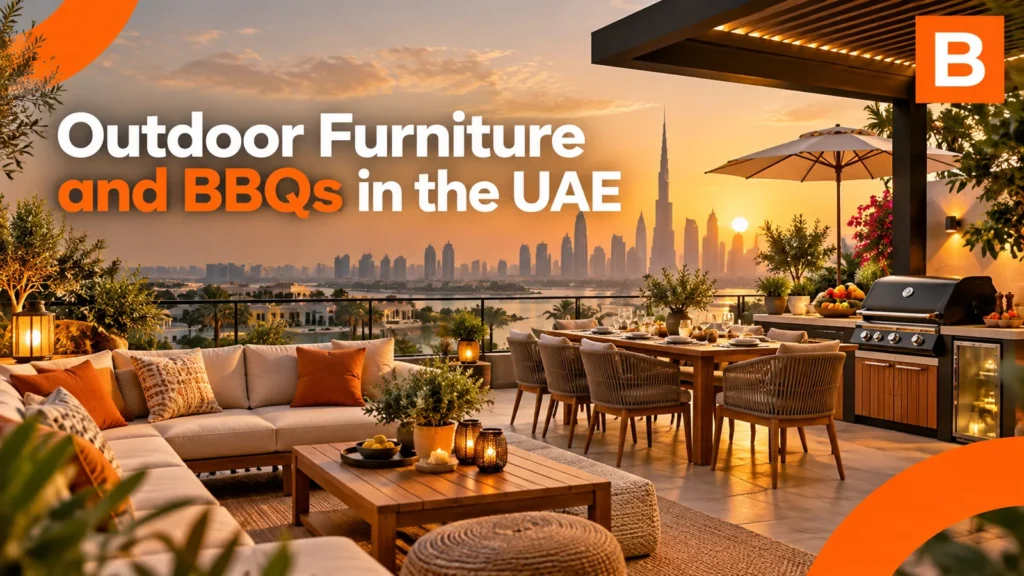
For a large part of the year, UAE balconies and gardens are too hot to use. Then the weather turns, and suddenly everyone wants a place to sit outside, eat outside and spend weekend evenings outdoors. That window is short, which is exactly why it is worth getting the setup right quickly — and without spending more than it deserves.
It is also a great category for swapping. People moving out rarely take outdoor furniture with them, and people moving in usually have none. The supply is constant, and demand peaks every autumn.
Cushions are the weak point of almost all outdoor furniture. Sun fades them and humidity can cause mildew. Covers that unzip for washing are worth looking for.
The most common surprise is plastic that looks fine but shatters under weight after a few summers in direct sun. Test it before you carry it home.
Many apartment buildings restrict or ban barbecues on balconies because of fire risk and smoke. Rules differ between buildings and communities, so check with building management before buying a grill. Villa gardens and designated community barbecue areas are usually the safer choice.
Replace a gas hose or regulator if in doubt — they are inexpensive. Never transport gas cylinders that look damaged.
For apartment balconies, compact and folding furniture works best: a bistro set, a pair of folding chairs, a slim bar table along the railing, floor cushions with a low table. Measure the balcony depth carefully — a table that fits on paper can leave nowhere to stand.
Plants make a balcony feel larger and cooler. Many people leaving the UAE give away pots and plants they cannot take with them. See leaving the UAE: a swap-first checklist.
Larger spaces open up dining sets, loungers, shade sails, outdoor rugs and fire pits. Shade is the most valuable thing to add: a large umbrella or sail extends the season by making midday bearable.
Fire pits are popular in the cooler months. Check community rules and keep them well away from furniture, cushions and plants.
Dining sets and loungers are bulky but often come apart. Find the bolts before deciding something is too large, keep fixings in labelled bags, and measure the route. Glass tops need two people and careful wrapping.
The same approach that works for indoor furniture applies. See swapping furniture in the UAE.
When the heat returns, store cushions indoors, cover what stays outside, and clean grills before putting them away. Then decide honestly: if you barely used it this season, swapping it in early autumn catches the most interest.
A lot of second-hand outdoor furniture looks worse than it is. A few hours of work can bring it back, and that makes faded or weathered pieces some of the best value available.
The things that cannot easily be fixed are rotten wood, cracked frames and brittle plastic. Check for those before anything else.
Even in the cooler months, the UAE sun is strong. Shade decides whether a balcony or garden is used at midday or only after dark.
Wind is the main risk for all of these. Close umbrellas when not in use and check fixings regularly. Many buildings also have rules on what can be attached to balconies, so check before installing screens or sails.
Evenings are when outdoor spaces are used most in the cooler months. Solar lights, string lights and lanterns make a big difference and are inexpensive. Use outdoor-rated products and cables, and keep connections away from water.
A family moves into a villa with a bare garden in October. Their neighbour is leaving the country and offers a teak dining set; they swap an unused treadmill for it. They find a large umbrella and base free from a building group, and pick up a pair of aluminium loungers in another swap.
They check with the community about barbecues, learn charcoal is permitted only in the garden, and swap a spare monitor for a used gas grill. They replace its hose for a small cost. By November they have a fully furnished garden for the cost of one hose.
Outdoor furniture listings need dimensions, materials and honest condition. Say whether cushions are included and their state, whether the table has a glass top, and how the set comes apart for moving. For grills, state the fuel type, the age if known, and whether a gas hose and regulator are included. Photograph pieces in daylight, including any fading or wear. Mention your floor and access for collection, and set a firm date — especially if you are moving out.
Outdoor furniture tends to be heavy and bulky, so collections fail more often on logistics than interest. Clear details up front save both sides a wasted trip.
When collecting, bring tools to dismantle larger pieces, blankets to protect glass and frames, and enough people to carry safely. Check every piece once more before loading, especially chairs and loungers that will take weight, and agree on the spot if anything is not as described.
Finally, think about how the space will be used. A balcony for morning coffee needs two comfortable chairs and a small table; a garden for weekend gatherings needs seating for guests, shade and a grill. Furnish for the way you actually live outdoors, not for a catalogue photo.
Teak and other hardwoods, and powder-coated aluminium, handle sun and humidity best. Plastic tends to fade and become brittle.
It depends on your building. Many restrict or ban balcony barbecues. Check with building management first; electric grills are more often allowed.
Sit on every chair, test every joint, press plastic and rattan for brittleness, and check cushions for mildew.
Usually, if the burners and firebox are sound. Replace the hose and regulator if in doubt.
Early autumn, when people moving out list it and before demand peaks.
Bring cushions indoors, cover frames, and keep grills clean and dry.
Make the most of outdoor season. Find balcony and garden furniture — or pass yours on — free on Bartr.