Category Guides
Yoga and Pilates Equipment in the UAE: What You Need
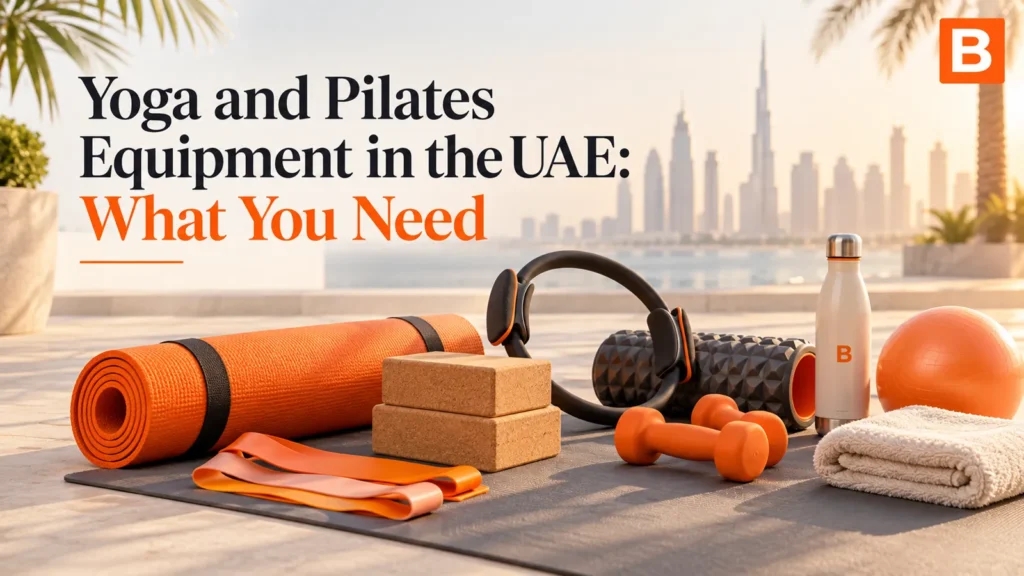
Yoga and pilates have very low barriers to entry. You can start with a mat and an online class. But as practice develops, equipment builds up: a second mat, blocks, straps, a bolster, resistance rings, perhaps a home reformer.
Much of it ends up barely used. People buy a full set at the start, find they prefer a studio, or move on to another activity. That makes yoga and pilates gear one of the most swap-friendly fitness categories — plentiful, light and easy to check.
Community yoga sessions also feature during the Dubai Fitness Challenge, which is a good reason to sort your kit out before the season starts.
Mats vary more than people expect, and the right one depends on how you practise.
In the UAE, grip in heat is a real consideration. A mat that is fine in an air-conditioned studio can become slippery outdoors.
Clean any second-hand mat before you use it, following the material’s care instructions. Some rubber mats are damaged by harsh cleaners and direct sun.
Blocks, straps and rings are close to ideal swap items. They are durable, easy to clean, and frequently bought in sets that go partly unused. Two blocks and a strap make a huge difference to beginners, especially for stretches and balance work.
Cork and dense foam blocks both work; cork is heavier and firmer, foam lighter and softer. Straps are washable. Bolsters are best when the cover comes off for washing.
Home reformers are the most significant purchase in this category. They take up floor space, are heavy, and need careful checking.
Try reformer classes before buying. Many people discover they enjoy the studio atmosphere more than home sessions. If you do buy, a second-hand machine in good condition is far better value than new.
For moving heavy equipment, use the same approach as with furniture — measure the route and plan help. See building a home gym in the UAE.
The cooler months bring yoga outdoors: parks, beaches, rooftops and community events. A few practical points:
Yoga and pilates are gentle, but they are still exercise. Beginners benefit from a qualified instructor, at least at first, to learn alignment. If you are pregnant, injured or have a health condition, check with a doctor and tell your instructor.
Props are safety equipment as much as convenience. A block under the hand in a standing pose is better than straining toward the floor.
Buying gradually means you only own what you use. Everything else can be swapped as your practice changes. More in swapping sports and fitness equipment.
The two overlap, but their equipment needs differ in useful ways.
Yoga involves more standing balance and flowing movement, so grip and stability matter most. A thinner, grippy mat is often preferred, with blocks and a strap as the main props.
Mat pilates involves more work lying down and on the knees, so cushioning matters more. A thicker mat is more comfortable, and small equipment — a ring, mini bands, a small ball — adds resistance.
If you do both, a medium-thickness mat is a reasonable compromise. Or own two: one thin for yoga, one thick for pilates. Both turn up regularly in swaps.
Good care keeps a mat grippy and hygienic for years.
A mat left rolled up damp in a hot car is the quickest way to ruin it. Ventilation and shade are the two things that matter most in the UAE.
Friends who practise together, or colleagues in a workplace class, often end up with mismatched props: three straps and no blocks, two bolsters and no mats. Pooling and swapping within the group fills the gaps quickly. When someone stops practising, their kit goes to the next beginner rather than into storage.
A resident decides to try yoga during the Dubai Fitness Challenge. They borrow a mat for the first week of community sessions, enjoy it, then swap an unused blender for a natural rubber mat, two cork blocks and a strap from someone who has moved to running.
Three months later they take reformer classes at a studio and decide a home machine is not for them. Their kit cost nothing but an appliance they had not used in a year.
Yoga and pilates items swap best in bundles. A mat with two blocks and a strap is a complete beginner kit, and far more appealing than a single prop. Mention the mat’s thickness, material and length, and be clear about how it has been used and cleaned. For reformers, include dimensions, the number of springs, the age of the springs if known, and how it comes apart for moving. Clear photos in daylight help buyers judge condition and colour.
When you receive props through a swap, wash or wipe everything before your first session, and replace anything that does not meet your own standard. A strap or block costs very little to replace, and starting with kit you trust makes it far more likely you will keep practising.
Just a mat. Blocks and a strap help, especially for beginners, but you can add them later.
Yes, if it is in good condition and you clean it properly. Avoid mats with a strong odour or a crumbling surface.
Mats with strong grip, such as natural rubber, cope better with heat and humidity. Test grip before agreeing to a swap.
Try studio classes first. If you practise regularly, a well-maintained second-hand reformer is good value; check the springs carefully.
Yes, especially in the cooler months. Practise early or near sunset, with water and sun protection.
Clean it and swap it. Props and mats are popular with beginners.
Start your practice with a mat from Bartr — or pass on the props you no longer use, free.