Market Insights
The 5 most swapped item categories in the UAE
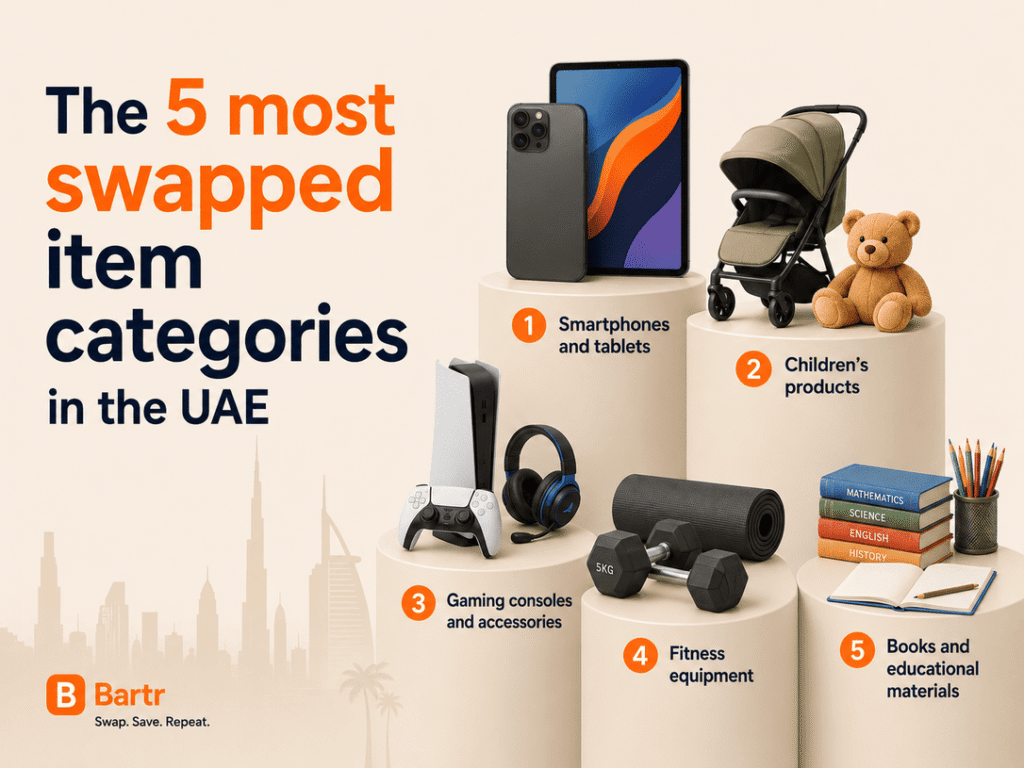
Almost anything safe, legal and honestly described can be traded. But five categories account for the bulk of real activity, and it is worth knowing why.
They all share one thing: the item becomes unwanted long before it becomes unusable. A phone two generations old still works perfectly. A pushchair is outgrown, not worn out. That gap between “finished with” and “finished” is exactly where swapping lives.
The busiest category by a clear margin. Upgrade cycles are short, and most households have at least one working device sitting unused in a drawer.
What moves: phones, tablets, laptops, monitors, gaming consoles and controllers, headphones, smartwatches and cameras.
Before you swap a device:
Demonstrate the device works before the reset, then reset just before handover. Full detail in our used electronics swap checklist. The UAE also publishes data protection guidance worth reading before handing over any device.
The highest value per swap, and the category most tied to the UAE’s constant moving cycle. A sofa that suited one apartment simply does not fit the next.
What moves: sofas, dining sets, desks, office chairs, wardrobes, shelving, lamps and home décor.
Furniture swaps fail for one boring reason more than any other: the item fits the room but not the doorway, lift or car.
Measure three things, not one:
Agree who transports it and confirm building access before setting a time. See swapping furniture in the UAE.
Children outgrow things on a schedule nobody can slow down, which makes this the most repeat-active category. Parents who swap once tend to swap again.
What moves: clothes, pushchairs, cots, high chairs, toys, books, bikes and scooters.
This is also the category that needs the most care. Split it in two:
Easy to assess: books, puzzles, clothing, simple toys and storage. Condition is visible and cleaning is straightforward.
Needs a higher standard: anything protecting a child. Car seats, helmets and similar impact-protection items can be weakened by a collision or poor storage even when they look fine. Where history cannot be verified, buying new is the safer call.
Read the full guidance in our parent’s guide to swapping baby and kids’ items safely.
Wardrobes turn over constantly — sizes change, seasons change, and taste changes faster than clothes wear out.
What moves: everyday clothing, shoes, bags, watches and accessories.
Two things decide whether a fashion swap works:
Disclose fading, bobbling, missing buttons, broken zips and repairs. See how to swap clothes and fashion in the UAE.
The classic “bought with enthusiasm, used twice” category — which is exactly why so much of it is in near-new condition.
What moves: dumbbells and weight sets, yoga mats, bikes, rackets, camping gear, cameras, musical instruments and board games.
Safety matters more here than looks:
A frayed cable or loose weld is a reason to stop, not to negotiate. More in swapping sports and fitness equipment.
Some things are hard to swap for good reasons:
Where an item is genuinely finished, route it through proper channels rather than passing on a risk. The UAE’s approach to household and electronic waste is set out in its official waste management guidance.
Look closely and the pattern is not really about the products. It is about the gap between an item’s useful life and its useful life to you.
A laptop is built to last years. Most people replace one long before it stops working. A cot is built to survive a decade of use and is finished with in two. A treadmill outlives the enthusiasm that bought it. In every case the item still has plenty left in it — just not for its current owner.
Categories where that gap is small barely move at all. Consumables get used up. Very cheap items are not worth arranging a meetup for. Highly personal items are hard to pass on. The five categories above sit exactly where the gap is widest.
Household turnover here is unusually high. People arrive needing to furnish an empty home, leave needing to empty one, and move apartments in between. Each of those events forces a decision about dozens of items at once — which is why furniture and electronics dominate, and why activity peaks between July and September.
Whatever the category, the same four questions decide what an item is realistically worth in a trade:
Answer those honestly in the listing itself and you will get fewer messages but better ones. Our guide to valuing your item for a fair swap turns these into a practical method, and where two items are close but not equal, swap plus cash closes the gap in person.
If you want a fast first swap, pick from the top of this list rather than the bottom:
See top items to swap in Dubai for a wider view of what UAE residents trade most.
Electronics, furniture, baby and children’s items, fashion, and sports or hobby gear. All five share the same pattern: people stop needing them long before the item stops working.
Electronics. Upgrade cycles are short, the items are easy to carry and test, and demand is constant across all seven Emirates.
Furniture, because the items are larger and more expensive to replace. It also needs the most planning — measurements, transport and building access.
Mattresses and heavily used soft furnishings, opened hygiene products, damaged electricals with exposed wiring or swollen batteries, and anything recalled, counterfeit or prohibited.
Many are, after proper checks and cleaning. Apply a higher standard to safety-critical products such as car seats and helmets, where an unverifiable history is a genuine risk.
No. Bartr is free to download and list, with no commission. If two items differ in value you can agree a cash difference and settle it in person.
Pick the category you have most of, list one item free on Bartr, and see what your unused things could become across all 7 Emirates.