Category Guides
Swapping Gold and Jewellery in the UAE: What to Check Before You Trade
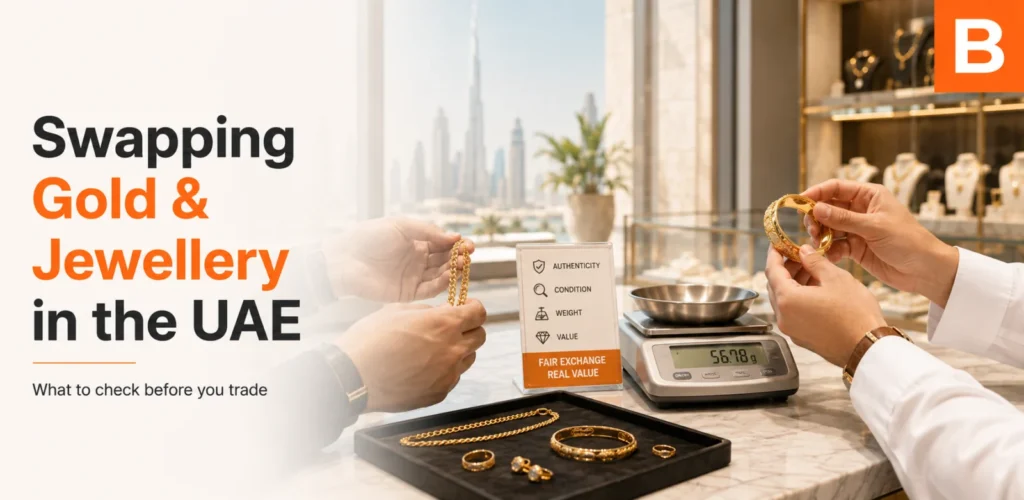
Every other category on Bartr can be assessed with your eyes and a few minutes. Jewellery cannot.
The value is concentrated into something small, easily misrepresented, and genuinely difficult to judge without equipment. Two chains that look identical can differ substantially in purity, weight and worth — and nothing about handling them will tell you which is which.
That combination means the informal checks that work perfectly well for a sofa or a phone are simply not adequate here. This guide is about the extra steps, and about the safety side of exchanging something valuable in person.
One thing worth saying plainly: Bartr is a swapping platform, not a valuation or authentication service. Nothing here is financial advice, and anything of meaningful value should be checked by a qualified professional.
Three pieces of information, and you need all three before agreeing anything.
Look for the hallmark indicating purity — for gold this is commonly expressed in karats, sometimes alongside a numeric fineness marking. The UAE has well-established hallmarking practice, and a piece bought locally will usually carry one.
If a piece is described only as “gold” with no purity stated, treat that as incomplete information, not a minor omission. Purity is the single largest factor in what a piece is worth, and any owner who knows their item will know it.
Ask for the weight in grams, ideally photographed on a scale. Then ask a follow-up question most people forget:
How much of that weight is actually gold? Gemstones, clasps, findings and any non-precious core all contribute weight without contributing gold value. A heavy piece is not automatically a valuable one.
“Hollow” and “plated” are the two answers that most change the picture, and both are entirely legitimate — provided they are disclosed.
Original receipts, certificates and gemstone grading reports materially change how confidently a piece can be assessed.
Their absence does not prove anything is wrong. Plenty of genuine jewellery is inherited, gifted or decades old with no paperwork surviving. What it does is shift the burden onto physical verification — which is fine, as long as everyone understands that is what is happening.
Where documentation does exist, photograph it clearly and check that the details actually match the item in front of you: weight, purity, stone specifications and any described characteristics. Documents that describe a different piece are worth less than no documents at all.
For anything of meaningful value, this is the step that matters most.
Have the piece assessed by a qualified independent professional before agreeing final terms. Not the other person’s jeweller, and not yours if the other person is uncomfortable — someone both sides accept.
This protects both people equally, which is the argument to use if you sense any hesitation. An honest owner has nothing to lose from verification and everything to gain from a trade that does not get disputed afterwards. Someone who resists it has told you something useful.
Neither party should rely solely on the other’s description. A short verification step costs very little compared with an exchange you regret.
The ordinary meetup advice still applies, and then some.
A jewellery district or a mall with assessment services nearby is ideal, because verification and exchange can happen in the same trip. Daytime, during normal business hours.
Keep possession of your own item until you are fully satisfied with theirs. And be discreet in the chat too — there is no reason to describe where you live, when you are home, or what else you own. See our safe swap meetup checklist, and the UAE government portal on cyber safety and digital security and consumer protection.
Some responses end the conversation rather than adjust it:
That last one deserves weight. Anyone can say “it was a gift” or “it was my grandmother’s”, and those are usually true. But if the story keeps changing, or does not fit the piece, decline — and never proceed with anything you suspect may be counterfeit, stolen or misrepresented.
More warning signs in 10 swap scam red flags.
The same principles apply beyond gold, with a few differences worth knowing.
Watches turn on authenticity and servicing rather than material weight. Ask for the reference number, serial number, box and papers, and when it was last serviced. Photograph the case back, the movement if visible, the clasp and the dial up close. A watch that has been serviced recently is worth meaningfully more than an identical one that has not, and a mismatched replacement part changes the picture entirely.
Silver carries its own hallmarks and is far less valuable by weight than gold, so verification effort should be proportionate. Tarnish is normal and cleans; pitting and thinning on plated items do not.
Costume and fashion jewellery needs almost none of this. Describe the materials plainly, disclose any discolouration or missing stones, and treat it as an ordinary fashion swap rather than a high-value one. The main thing is not to describe something as gold or silver unless it genuinely is — “gold-tone” and “gold-plated” are different claims from “gold”, and using the wrong one turns an honest listing into a dispute.
Worth asking honestly, because jewellery is one of the few categories where selling is often the better route.
Sell when you need cash. Gold has a transparent, weight-and-purity-based market, and a jeweller will give you an immediate figure against it — which is hard to beat for speed and certainty.
Swap when you would rather have a different piece, or something else entirely, than the value of something you never wear. That is the situation swapping genuinely improves on: converting an unworn item directly into something you will use, without the sale-then-purchase round trip.
Be realistic about time, though. Higher-value pieces take longer to match than everyday items, because the pool of people who both want your piece and have something comparable is smaller. See bartering vs selling, item by item.
With jewellery they rarely will, because two pieces almost never share the same purity, weight and stones.
Swap plus cash handles this: both people agree a difference and settle it in person at the handover. The important rule is that the amount is agreed in writing beforehand, once both pieces have been assessed — never renegotiated at the meeting, and never based on one side’s valuation alone. See how swap plus cash works and how to value your item.
Look for the hallmark showing purity, confirm the weight in grams, ask for original documentation, and have anything of meaningful value assessed by a qualified independent professional before agreeing terms.
No. Plenty of genuine jewellery is inherited or decades old with no paperwork. It simply means relying more heavily on hallmarks, weight and an independent assessment.
Somewhere secure, public and monitored during business hours — ideally where verification can be done on the spot. Bring another adult and keep the arrangement discreet.
Refusal to state purity or weight, refusal of independent verification, pressure to decide immediately, a request to move somewhere isolated, or provenance that cannot be explained plainly.
If you need cash, usually yes — gold has a transparent market and a jeweller will give you an immediate figure. Swap when you would rather have a different item than the money.
No. Bartr connects two people; it does not value, authenticate or hold items. Any meaningful piece should be checked by a qualified independent professional before you agree terms.
High-value swaps deserve extra care. Agree every detail in writing on Bartr, verify properly with an independent professional, and exchange somewhere secure.